Cognitive Function Test: Why Early Memory Assessment Matters
Have your elderly parents started forgetting names, repeating the same questions, or misplacing everyday items? While occasional forgetfulness is common with ageing, persistent memory problems may indicate Mild Cognitive Impairment (MCI) or the early stages of dementia.
A Cognitive Function Test is one of the most effective ways to understand whether changes in memory, thinking, or behaviour require further medical evaluation. Early assessment can help individuals receive timely intervention, improve quality of life, and support families in planning appropriate care.
This guide explains everything you need to know about cognitive function tests, dementia tests, memory tests, and forgetfulness in elderly individuals.
What is a Cognitive Function Test?
A Cognitive Function Test is a scientifically designed psychological assessment that measures different aspects of brain functioning.
It evaluates:
- Memory
- Attention and concentration
- Learning ability
- Language
- Executive functioning
- Problem-solving
- Orientation
- Visual-spatial abilities
- Processing speed
These assessments help identify patterns of cognitive strengths and weaknesses and determine whether further medical evaluation is needed.
What is a Dementia Test?
A Dementia Test is commonly used to assess whether an individual may be experiencing cognitive decline associated with Alzheimer’s disease or other dementias.
It is important to understand that no single dementia test confirms dementia. Instead, cognitive assessments are screening tools that, together with medical history, neurological examination, laboratory investigations, and brain imaging (when required), help clinicians reach an accurate diagnosis.
Memory Test vs Dementia Test
Many people use these terms interchangeably, but they are slightly different.
A Memory Test primarily evaluates memory functions such as recalling words, remembering recent events, and retaining information.
A Dementia Test evaluates multiple cognitive domains, including:
- Memory
- Attention
- Language
- Executive functioning
- Orientation
- Visuospatial skills
- Daily functioning
Is Forgetfulness in Elderly Normal?
Normal ageing may cause:
- Occasionally forgetting names
- Misplacing glasses
- Taking longer to remember information
However, persistent forgetfulness is not considered a normal part of ageing.
Warning signs include:
- Repeating the same questions
- Forgetting recent conversations
- Difficulty managing finances
- Missing appointments frequently
- Getting lost in familiar places
- Difficulty following conversations
- Poor judgement
- Personality changes
- Increased dependence on family members
If these symptoms are becoming more frequent, a professional Cognitive Function Test is recommended.
Common Causes of Forgetfulness in Elderly
Forgetfulness can result from many conditions, including:
- Normal ageing
- Mild Cognitive Impairment (MCI)
- Alzheimer’s disease
- Vascular dementia
- Parkinson’s disease
- Depression
- Anxiety
- Vitamin B12 deficiency
- Thyroid disorders
- Medication side effects
- Stroke
- Sleep disorders
A comprehensive assessment helps identify the underlying cause.
Who Should Get a Cognitive Function Test?
A cognitive assessment is recommended for:
- Adults aged 60 years and above with memory complaints
- Individuals with a family history of dementia
- Older adults experiencing increasing forgetfulness
- People with diabetes, hypertension, or stroke
- Individuals with Parkinson’s disease
- Older adults with depression
- Anyone experiencing difficulty performing daily activities due to memory or thinking problems
What Happens During a Cognitive Assessment?
A professional cognitive assessment generally includes:
Clinical Interview
The psychologist gathers information about:
- Medical history
- Family history
- Current symptoms
- Education
- Lifestyle
- Functional abilities
Standardized Cognitive Tests
Depending on the individual’s needs, assessments may include (but not limited to):
- Mini-Mental State Examination (MMSE)
- Montreal Cognitive Assessment (MoCA)
- Addenbrooke’s Cognitive Examination (ACE-III)
- Trail Making Test (TMT)
- Clock Drawing Test
- Functional Assessment Scales
Each test evaluates different aspects of cognitive functioning.
Benefits of Early Dementia Screening
Early assessment provides several benefits:
Early Intervention
Timely medical treatment and lifestyle changes may help manage symptoms more effectively.
Better Treatment Planning
Healthcare professionals can recommend appropriate therapies and rehabilitation.
Improved Quality of Life
Early support helps maintain independence for longer.
Family Education
Families gain a better understanding of the condition and learn effective caregiving strategies.
Future Planning
Individuals can actively participate in financial, legal, and healthcare decisions while they still have decision-making capacity.
Common Cognitive Tests Used Worldwide
| Assessment | Purpose |
|---|---|
| MMSE | General cognitive screening |
| MoCA | Detects Mild Cognitive Impairment |
| ACE-III | Comprehensive cognitive assessment |
| Trail Making Test | Executive functioning and attention |
| Clock Drawing Test | Visuospatial abilities |
| Mini-Cog | Rapid dementia screening |
Can Dementia Be Prevented?
Although dementia cannot always be prevented, research suggests that maintaining good brain health may reduce the risk.
Healthy habits include:
- Regular physical exercise
- Healthy balanced diet
- Good sleep
- Blood pressure control
- Diabetes management
- Social engagement
- Reading and learning
- Brain exercises
- Managing depression
- Avoiding smoking
- Limiting alcohol consumption
Frequently Asked Questions
What is the difference between a Cognitive Function Test and a Memory Test?
A memory test evaluates memory alone, whereas a cognitive function test evaluates multiple cognitive abilities including memory, attention, language, executive functioning, and visuospatial skills.
How long does a Cognitive Function Test take?
Screening tests generally take 10–30 minutes, while comprehensive assessments may require longer depending on the individual’s condition.
Can dementia be diagnosed with one test?
No. Dementia diagnosis requires a complete clinical evaluation by qualified healthcare professionals. Cognitive tests are important screening tools but are not diagnostic on their own.
At what age should someone get a memory test?
There is no fixed age. Anyone experiencing persistent memory concerns or cognitive changes should consider professional evaluation, especially adults over 60 years.
Is forgetfulness always a sign of Alzheimer’s disease?
No. Memory problems may also result from stress, depression, vitamin deficiencies, thyroid disorders, medications, sleep problems, or other medical conditions.
Meet the Expert – Dr Subodh Kumar
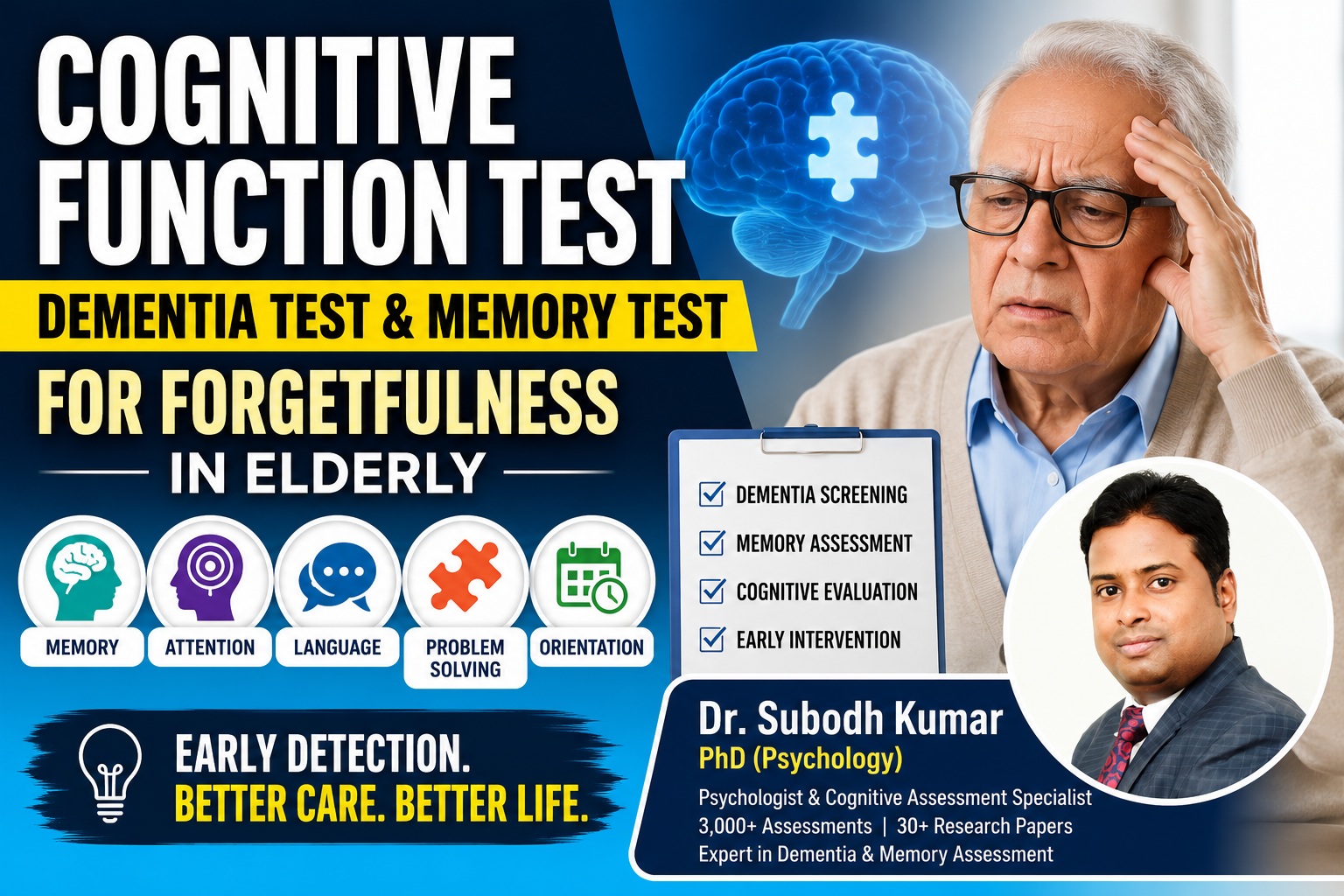
Dr Subodh Kumar is a Psychologist and Cognitive Assessment Specialist with extensive expertise in cognitive psychology, neuropsychological assessment, dementia screening, and elderly mental health.
He has:
- Conducted 3,000+ psychological and cognitive assessments
- Published 30+ research papers in national and international journals
- Guided 50+ postgraduate research dissertations
- Authored book (Believe It or Not, But It Happens) and educational resources in psychology
- Worked extensively with older adults experiencing memory loss, dementia, Alzheimer’s disease, Parkinson’s disease, and age-related cognitive disorders
His evidence-based approach combines standardized cognitive assessment tools with personalized recommendations, helping individuals and families understand cognitive health and make informed decisions regarding treatment, rehabilitation, and long-term care.
Areas of Expertise
- Cognitive Function Assessment
- Dementia Screening
- Memory Assessment
- Neuropsychological Evaluation
- Alzheimer’s Disease Assessment
- Mild Cognitive Impairment (MCI)
- Elderly Mental Health
- Psychological Rehabilitation
Why Choose Dr Subodh Kumar?
✔ Comprehensive cognitive evaluation using internationally recognized assessment tools
✔ Detailed assessment reports with practical recommendations
✔ Individualized guidance for patients and caregivers
✔ Early identification of cognitive decline
✔ Evidence-based psychological assessment and rehabilitation planning
✔ Professional, ethical, and compassionate care
Book Your Cognitive Function Test Today
Is Your Loved One Becoming More Forgetful?
Early detection can make a significant difference.
If you have noticed increasing forgetfulness, confusion, difficulty remembering recent conversations, or changes in behaviour in your elderly parent or loved one, don’t wait for symptoms to worsen.
A professional Cognitive Function Test can provide valuable insights into memory, thinking abilities, and overall cognitive health, helping determine whether further medical evaluation or intervention is needed.
A Comprehensive Cognitive Assessment Includes:
- Detailed clinical interview
- Standardized cognitive testing
- Dementia and memory screening
- Comprehensive psychological report
- Personalized recommendations
- Guidance for caregivers and family members
- Referral recommendations for further medical evaluation, when appropriate
Take the First Step Towards Better Brain Health
Protect your loved one’s cognitive health through early assessment and expert guidance.
Schedule your Cognitive Function Assessment with Dr Subodh Kumar today and gain clarity about memory concerns before they become more serious.
Final Thoughts
Memory problems should never be ignored. While some forgetfulness is part of normal ageing, persistent changes in memory, thinking, or behaviour deserve professional attention.
A Cognitive Function Test is one of the most effective ways to detect cognitive decline early, guide further evaluation, and support better treatment planning.
Early assessment empowers individuals and families to take informed action, maintain independence for as long as possible, and improve overall quality of life.